
The short answer
To choose a Korean serum for dark spots, look at four things: which brightening active leads the formula and how much of it there is, whether that active stays stable in the bottle, what the rest of the formula is built on, and whether the product is notified in Korea as a brightening functional cosmetic. Then use it every day for several weeks with sunscreen. No serum outruns daily UV.
Why Korean serums are popular for dark spots
Korea regulates brightening products as functional cosmetics. A brand that wants to make a brightening claim on the Korean market uses an ingredient from the MFDS list of notified brightening ingredients at the listed level, or submits data, and the product is reviewed or notified before sale. That does not make every Korean serum effective, but it gives you something checkable: on a Korean label you will often see the words "functional cosmetic (brightening)".
Korean formulas also tend to combine several gentler brightening ingredients rather than relying on one harsh one. That suits people who want to work on the look of dark spots without stinging or peeling.
Step 1: find the lead active and its amount
Look past the front label to the ingredient list and the product page. A good brand tells you which ingredient leads and how much is in the bottle. The most common leads in Korean brightening serums are:
| Ingredient | What it does for tone | Good to know |
|---|---|---|
| Tranexamic acid (TXA) | Quiets an early signal that tells pigment cells to make more melanin | Stable in water, usually gentle |
| Niacinamide | Slows the handover of pigment to surface cells | On the MFDS brightening list; pairs with almost anything |
| Vitamin C and its derivatives | Antioxidant; slows the enzyme that makes melanin | Pure vitamin C is fragile; derivatives are steadier |
| Alpha-bisabolol | Soothing; on the MFDS brightening list | Often a supporting active |
Amounts are often given in ppm (parts per million): 10,000 ppm is 1%. Our ppm vs percent checklist explains how to read them, and why a big number on a "complex" is not the same as the pure ingredient.
Step 2: check that the active will last
A brightening active only helps if it is still intact when it reaches your skin. Pure vitamin C turns yellow, then brown, as it oxidises in water, light and air. Tranexamic acid, niacinamide and vitamin C derivatives are far steadier. If you choose pure vitamin C, buy small, store it cool and dark, and use it up quickly. Our comparison of tranexamic acid vs vitamin C goes into detail.
Step 3: read the base of the formula
The first ingredient is usually water. Some Korean serums replace part of it with a plant water or extract, which changes how the serum feels and what else it brings. It is worth knowing what you are paying for: aqua, plant water or extract explains the difference.
Step 4: match comfort to your skin
- Reactive or easily irritated skin: a TXA- or niacinamide-led serum at a mild pH is usually the comfortable choice.
- Oily, breakout-prone skin with marks left behind: a light, water-based texture; you can pair it with a gentle acid toner on alternate days.
- Dull, uneven skin that tolerates acids: a vitamin C serum can work well, in the morning under sunscreen.
Whatever you choose, patch test first and introduce one new active at a time.
Step 5: give it time, and wear sunscreen
Marks fade as skin renews, so judge a brightening serum over weeks, not days. Use it once or twice a day, and finish every morning with a broad-spectrum sunscreen. UV is the strongest signal for pigment, and it will undo progress faster than any serum can make it. A short routine diary helps you judge fairly.
A quick checklist before you buy
- Is the lead brightening active named, with an amount?
- Is it a stable form, or will it brown in the bottle?
- Is the product notified in Korea as a brightening functional cosmetic?
- Does the texture suit your skin type?
- Will you actually use it every day, with sunscreen?
Where our serum fits
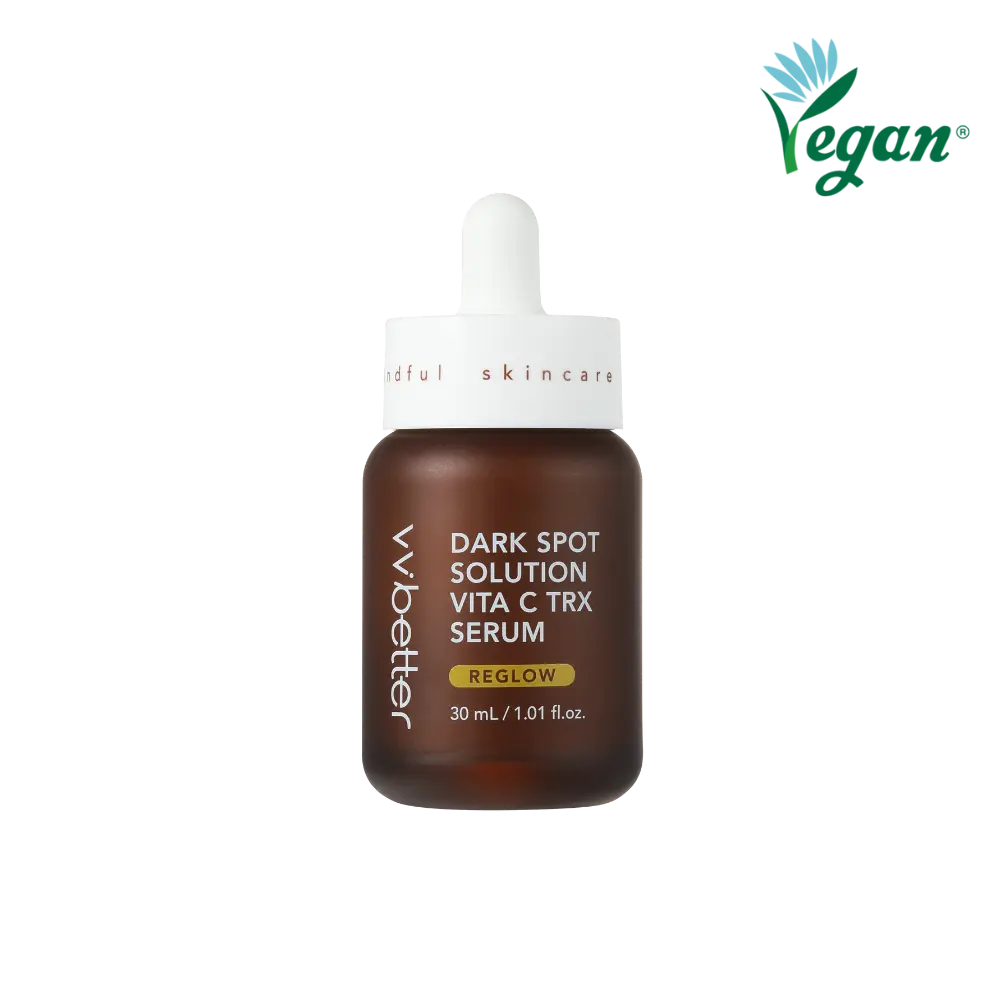
Our Dark Spot Solution Vita C TRX Serum was built on this checklist. Tranexamic acid leads at 3% (30,000 ppm), with niacinamide, alpha-bisabolol, a stable vitamin C derivative and MELAWAY™, in a base of 72% sea buckthorn fruit water instead of purified water. In Korea it is notified to the MFDS as a brightening and anti-wrinkle functional cosmetic. It is a lightweight, clear serum used at 2–3 drops, morning or night. If firmness or breakouts are your bigger concern, see which of our three serums to start with.
Frequently asked questions
Which ingredient is best for dark spots?
There is no single best one. Tranexamic acid, niacinamide and vitamin C each work at a different step, which is why many serums combine them. Choose based on your skin's comfort and how consistently you will use the product.
Can I use a dark spot serum with retinol or acids?
Usually yes, but introduce them one at a time and reduce frequency if your skin feels irritated. TXA and niacinamide combine easily with most routines.
Is a Korean brightening serum the same as a bleaching product?
No. Cosmetic brightening ingredients help the look of uneven tone and marks over time; they do not bleach skin. If you have a skin condition or are pregnant or breastfeeding, ask your doctor before adding new actives.
Cosmetic information, not medical advice. Results vary from person to person.


