less is better
Meet us at K-Beauty Expo · Oct 15–17 ↗
A drop of Firming Bakuchiol PDRN Serum falling from the glass dropper into the lilac REWIND bottle

Firming & elasticity

Marine-plant PDRN (vegan PDRN)

INCI Sodium DNA (in AIO MARINE PLANT PDRN)

Also known as PDRN · polydeoxyribonucleotide · vegan PDRN · seaweed PDRN · plant PDRN · salmon-free PDRN · AIO MARINE PLANT PDRN

Salmon-free PDRN from marine plants, for skin that looks tired and less firm.

PDRN (polydeoxyribonucleotide) is a mixture of DNA fragments, best known from salmon-derived ingredients in Korean skincare and aesthetic clinics. Vegan PDRN is made from plants instead; VVBETTER uses AIO MARINE PLANT PDRN, a patented complex from marine plants, for skin that looks tired and less firm. It is in the Firming Bakuchiol PDRN Serum at 2% of the complex and the Rejuvenating Squalane Mask at 0.2%.

What it is

PDRN stands for polydeoxyribonucleotide: chains of DNA building blocks (nucleotides) of a range of lengths. Classic PDRN is extracted and purified from the sperm cells of salmon or trout. It was first developed in Italy as a medicine, and in Korea it became famous through injectable “salmon” treatments in aesthetic clinics, then spread into topical skincare.

Vegan PDRN takes the DNA from plants instead, avoiding fish entirely. The VVBETTER complex, AIO MARINE PLANT PDRN, is derived from marine plants (seaweed) and patented by its supplier (Korean patent No. 10-2249241). The supplier states that it has a smaller molecular weight than animal-derived PDRN. As a raw material it is a water-based complex: water, 1,2-hexanediol and the DNA itself.

On any label, PDRN of any origin appears as Sodium DNA. Percentages quoted for PDRN products usually describe the complex raw material, not pure DNA; our serum contains 20,000 ppm of the complex, while its ingredient list prints the Sodium DNA itself as 1 ppm.

Benefits for skin

  • Care for tired-looking skin

    Used to help skin that looks fatigued and dull look more revitalized and healthy.

  • Supports a firmer, more resilient look

    Part of firming-minded formulas for skin that has started to look less firm and supple.

  • Supports the feel of a comfortable barrier

    Used in formulas that aim to keep skin feeling calm and well conditioned.

  • Animal-free

    Gives vegans and people avoiding fish-derived ingredients access to the PDRN trend.

How it works

Most of what is known about PDRN comes from salmon-derived PDRN, much of it used as an injectable medicine. In those settings it is thought to work partly through adenosine A2A receptors and by supplying nucleotides that cells can reuse, which researchers link to tissue repair and a calmer inflammatory response. Those are medical findings, not cosmetic claims.

Topical cosmetics are a different situation. Large DNA fragments do not pass easily through intact skin, which is why suppliers work on smaller fragments and delivery systems. For plant-derived PDRN specifically, a 2026 scientific review concluded that the evidence is still mainly from laboratory studies and should not be read as clinical equivalence to animal-derived PDRN. Lab data do show overlapping signals with classic PDRN in skin cells.

In a formula, we see PDRN as one member of a firming team, not a stand-alone miracle. Its role is to support a revitalized, resilient look alongside better-documented ingredients.

How to use it

Typical amount: PDRN products usually state the amount of a complex raw material, from a fraction of a percent up to a few percent. VVBETTER uses 2% (20,000 ppm) of the complex in its serum and 0.2% (2,000 ppm) in its sheet mask.

When: morning and night in a serum; two or three evenings a week as a sheet mask.

Where in the routine: serum after toner, then cream; the mask after toner, with the remaining essence patted in.

Expectations: firming routines change slowly; use consistently for at least 8 weeks and protect with daily sunscreen.

Pairings

Pairs well with

  • Bakuchiol

    A plant-based retinol alternative that handles firmness and fine lines while PDRN supports a revitalized look.

  • Adenosine

    PDRN research is closely tied to adenosine signalling; adenosine itself is a Korean-notified anti-wrinkle ingredient.

  • Peptide complex

    Peptides add firming-minded signals through a different route.

  • Hyaluronic acid

    Hydration makes skin look plumper while firming ingredients work over time.

Use with care

  • Strong AHA or BHA leave-on products

    Avoid layering firming serums with high-strength exfoliating acids in the same routine, which may irritate.

  • Recent in-clinic procedures

    After injections, lasers or peels, follow your practitioner’s aftercare advice before adding new active skincare.

Who it suits

Suits most skin types, especially mature, tired-looking or dull skin and anyone who wants a fish-free PDRN option. Sensitive skin can usually use it; very sensitive or thin skin should introduce one new serum at a time and may prefer the sheet mask as a gentler first step.

Good to know

  • Complex percent is not DNA percent

    A “2% PDRN” claim usually means 2% of a complex raw material. Check whether the number refers to the complex or to Sodium DNA.

  • Evidence for vegan PDRN is early

    Research on plant-derived PDRN is mainly in the lab; most clinical PDRN research is on injected salmon PDRN. Keep expectations realistic.

  • Topical is not injectable

    Clinic PDRN injections are medical procedures. A serum or mask works on the skin surface and should not be compared with them.

  • Patch test

    PDRN itself is rarely irritating, but the rest of the formula matters. Patch-test if your skin is reactive.

IN OUR FORMULAS

In VVBETTER

Where you will find it, how much the product record states, and what it works with in that formula.

Amount 2% (20,000 ppm) of the complex

The serum’s patented vegan PDRN, AIO MARINE PLANT PDRN, and the largest share of its 30,500 ppm of firming actives. The ingredient list names it as Sodium DNA (1 ppm), which is the DNA share of the complex.

Works with, in this formula

  • BakuchiolBakuchiol 1% (10,000 ppm), over 99% pure as a raw material, provides the plant-based retinol step for skin losing its elasticity.
  • AdenosineAdenosine and niacinamide, 20,400 ppm combined, are the MFDS-listed ingredients behind the serum’s Korean dual-functional notification for brightening and wrinkle improvement.
  • SqualanePlant squalane (100 ppm) and an EGF peptide complex (oligopeptide-1, -2, -3 and hexapeptide-11 with sodium hyaluronate) help skin look smoother and feel supple.
  • Aloe vera (leaf water, juice and extract)60% aloe vera leaf water replaces purified water as the base, to help tired-looking skin feel revitalized.

How to use it Shake well, then 2–3 drops over face and neck after toner, morning and night; sensitive skin starts every other night. Follow with a cream and, in the morning, sunscreen.

View product

Amount 0.2% (2,000 ppm) of the complex

The same marine-plant PDRN complex as the serum at one tenth of the amount, as part of the mask’s four-part plant-origin rejuvenating complex. A way to try vegan PDRN before the serum.

Works with, in this formula

  • SqualanePlant-derived squalane from olives (100 ppm) keeps skin feeling soft and conditioned.
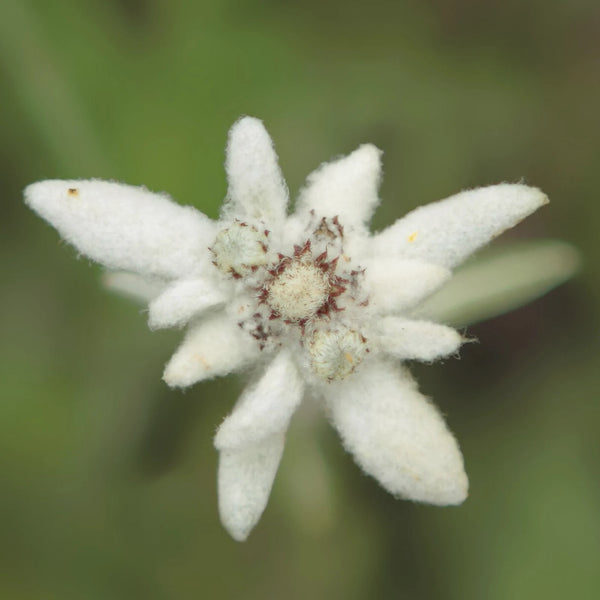
  • Edelweiss callus culture extractEdelweiss callus culture extract, the plant-derived “phyto placenta”, completes the plant-origin complex.
  • Hydrolyzed extensinA carrot-derived collagen-type protein used in place of animal collagen.
  • Hyaluronic acidThree types of hyaluronic acid and beta-glucan in the essence leave skin feeling deeply hydrated.

How to use it 2–3 times a week, ideally in the evening: after toner, fit the sheet, leave 10–20 minutes, pat in the remaining essence, then cream.

View product

Questions people ask

What is vegan PDRN?

Vegan PDRN is polydeoxyribonucleotide, a mixture of DNA fragments, made from plants instead of salmon or trout. VVBETTER uses AIO MARINE PLANT PDRN, a patented complex from marine plants (supplier patent No. 10-2249241), with no animal-derived material.

Is plant PDRN as effective as salmon PDRN?

That has not been established. Research on plant-derived PDRN is still mainly laboratory work, and a 2026 review cautioned against assuming clinical equivalence with animal-derived PDRN. Most clinical PDRN evidence comes from injected salmon PDRN, which is a medical use.

Does 2% PDRN mean 2% DNA?

No. In the VVBETTER Firming Bakuchiol PDRN Serum, 2% (20,000 ppm) is the amount of the whole water-based complex. The ingredient list names the DNA as Sodium DNA at 1 ppm.

Is topical PDRN the same as PDRN injections?

No. Injections are in-clinic medical procedures that place PDRN inside the skin. A serum or sheet mask is a cosmetic that works on the surface, and the two should not be compared.

Which VVBETTER products contain vegan PDRN?

The Firming Bakuchiol PDRN Serum contains 2% (20,000 ppm) of the complex, and the Rejuvenating Squalane Mask contains 0.2% (2,000 ppm) of the same complex. Both carry vegan certification marks.

References

  1. Kim HJ et al. Plant-derived polynucleotides/polydeoxyribonucleotides in skin biomaterials: delivery platforms and bioactivity attribution. J Funct Biomater, 2026
  2. Polydeoxyribonucleotide (PDRN) in post-procedure recovery in aesthetic medicine: a narrative review. Cureus, 2026

General cosmetic information, not medical advice. Amounts come from VVBETTER product records; where a record names an ingredient without an amount, none is shown. 1% is 10,000 ppm.