The short answer
To read a skincare ingredient list, start at the top and treat the order as a rough ranking: ingredients are listed from the largest amount to the smallest, down to about 1% of the formula. Learn a handful of plant names and a few families of supporting ingredients, and a 46-line list becomes readable in a couple of minutes. Then check the practical details on the page before you add to bag.
What an ingredient list is, and why it looks like Latin
Ingredient names follow INCI, the International Nomenclature of Cosmetic Ingredients. It is a shared naming system, so the same ingredient has the same name on a bottle sold in Seoul, Los Angeles or Berlin. Plants appear under their botanical names, which is why bamboo water is Bambusa Vulgaris Water and yuja fruit extract is Citrus Junos Fruit Extract. Chemicals appear under chemical names: niacinamide, succinic acid, panthenol.
The order carries information. In the US, ingredients are listed in descending order of predominance. Past the 1% mark, brands may list ingredients in any order, so the back half of a long list is not strictly ranked. That makes the first dozen or so lines the most informative part.
VVBETTER describes its approach as clean and thoughtful formulations, free from unnecessary or harsh components. That kind of statement is easier to weigh when you can read the list yourself, which is why this guide works through one of our own labels.
Four habits for reading any list
- Read the first line first. It is the largest part of the formula, and it can be Water, a plant water, an extract or an oil. On our serums it is a plant water: sea buckthorn fruit water (72%) on Vita C TRX, aloe vera leaf water (60%) on the PDRN serum, bamboo water (60%) on the one below. We cover the difference in how to read a formula’s base.
- Sort the next lines into families. Most of the early lines are carriers and supporting ingredients, not the headline actives.
- Find the headline active and its position. If the product page states an amount, see where the ingredient sits on the list.
- Look at the tail. Preservatives, extracts at low amounts and any fragrance or essential oils tend to be down there.
A line-by-line example: the Succinic Balancing Serum
The Jeju Yuja Succinic Balancing Serum has 46 ingredients. Here are the lines worth stopping at, with a plain-language note for each:
| # | INCI name | What it is |
|---|---|---|
| 1 | Bambusa Vulgaris Water | Bamboo water, the base: 60% of the formula. |
| 2 | Water | Purified water, listed after the plant water. |
| 3–5 | Dipropylene Glycol, Butylene Glycol, 1,2-Hexanediol | Supporting liquids that help ingredients dissolve and spread. Glycols and diols are common in water-based products. |
| 6 | Niacinamide | A form of vitamin B3, stated at 2% (20,000 ppm). |
| 8 | Succinic Acid | The headline active, also 2% (20,000 ppm). |
| 13 | Citric Acid | A mild AHA, stated at 2,700 ppm (0.27%). |
| 14 | Glycerin | A humectant, an ingredient that draws in and holds water. |
| 17, 22 | Ethylhexylglycerin, Disodium EDTA | Supporting ingredients. Ethylhexylglycerin is commonly used to support the preservative system; Disodium EDTA is a chelating agent that helps keep the formula stable. |
| 34–43 | Camellia Sinensis Leaf Extract, Salix Alba (Willow) Bark Extract, Citrus Junos Fruit Extract, Ceramide NP and others | Plant extracts at small amounts, with a few other ingredients mixed in. Seven of the extracts in this stretch are the patented ACZERO™ complex, 0.1% (1,000 ppm). |
| 45 | Gluconolactone | A PHA, a gentle exfoliating acid. |
| 46 | Lactobacillus Ferment Lysate | A fermented ingredient, listed last. |
Three things stand out. First, Niacinamide at position 6 and Succinic Acid at position 8 are both 2%, so ingredients present in similar amounts sit close together. Second, the 1% line falls somewhere between positions 8 (2%) and 13 (0.27%), which tells you roughly how far the “large” part of the list reaches. Third, many of the plant extracts people notice on a product page sit in the tail, so a name being on the list is not the same as it being a headline ingredient.
The product page describes this serum around soothing, skin barrier and texture care (REFINE). The list shows where those words come from: bamboo water at the top, niacinamide and succinic acid next, and Lactobacillus Ferment Lysate at the end, which the page links to supporting the skin barrier. Each of those is a line you can find, which is the point of reading the list.

When the list does not start with water
Do not assume every first line is Water. The Teca Lifting Moisture Cream opens with Centella Asiatica Extract (53%), and the Gentle Deep Cleansing Oil opens with Helianthus Annuus (Sunflower) Seed Oil. Both are normal for what they are: a cream built on a plant extract and a cleanser built on oil (21 plant oils, 81.6% of the formula). The Teca cream’s 53% centella base suits the Blue Line, which is base skincare for dry, sensitive or dehydrated skin.
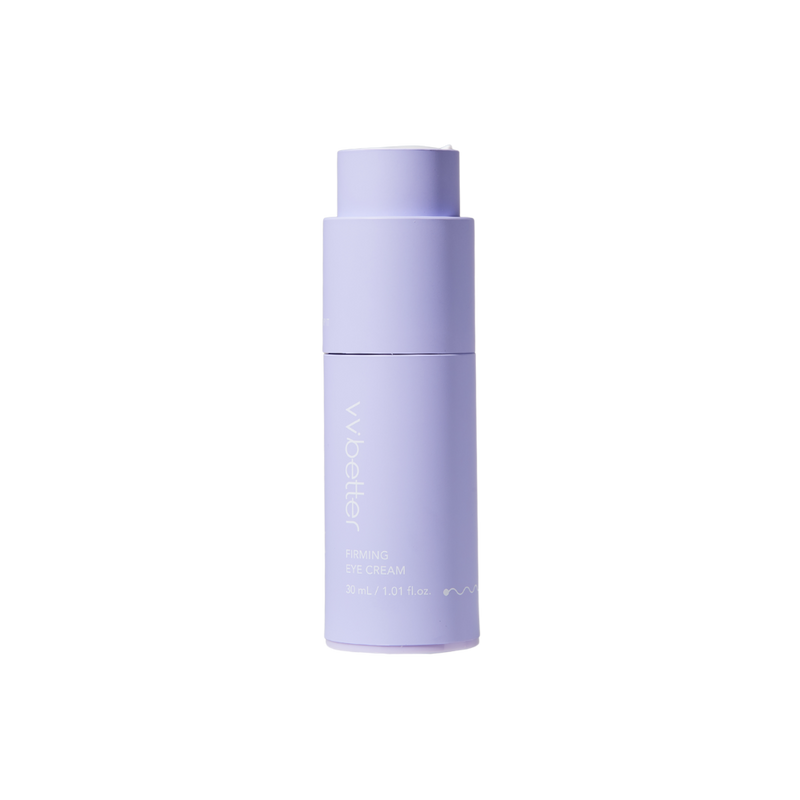
A plant water can also open the list without Water following it. The Firming Eye Cream starts with Camellia Sinensis Leaf Water, green tea water at 73%, and the second line is Glycerin, not Water. So “plant water first, Water second” describes the serums, not every product.

The other things to check before you add to bag
An ingredient list is one of five things worth reading on a product page.
- The exact item. A mini, a full-size bottle and a set can have different contents, and minis can have their own formulas. Check what is in the box, not just the picture.
- The directions. Our serums come in dropper bottles and are used at 2–3 drops; the cleansing oil and bubble cleanser use a pump. The directions tell you amount, timing and whether to rinse off.
- The cautions. If you are new to acids or sensitive, patch-test on the jawline for two nights first.
- Shipping to you. Delivery options show at checkout, and free-shipping thresholds by destination are shown in your cart and at checkout. See our shipping information. One product, the Daily Airfit Sunscreen, is not shipped to the United States.
- Returns. Unopened, unused items can be returned within 30 days, and approved returns come with a prepaid label. The refund policy has the details.
When a name on the list is unfamiliar
Search the name rather than guess. Our ingredient pages explain the ones that matter most in our formulas. For scent-related names such as Fragrance, Limonene and Linalool, our guide on reading a fragrance label shows where they appear. For the numbers beside ingredients, see ppm vs percent. Stopping to look up one unfamiliar name is a small act of mindful skincare; the dot above the V in VVBETTER stands for exactly that moment of focus.
Quick answers
Is the first ingredient the most important one?
It is the largest, not necessarily the most important. The first line is usually a carrier such as water; the ingredient you bought the product for may sit lower on the list.
Does a longer list mean a better product?
No. A long list usually has many supporting ingredients and plant extracts at small amounts. What matters is whether the key ingredients are present at amounts the brand states, and whether the formula suits you.
Why is Water sometimes called Aqua?
They are the same ingredient. INCI uses “Aqua” on some labels, particularly in Europe, and “Water” on others.
Where to go next
- Jeju Yuja Succinic Balancing Serum — the full list from the example above.
- Teca Lifting Moisture Cream — an extract-first list.
- Gentle Deep Cleansing Oil — an oil-first list.