The short answer
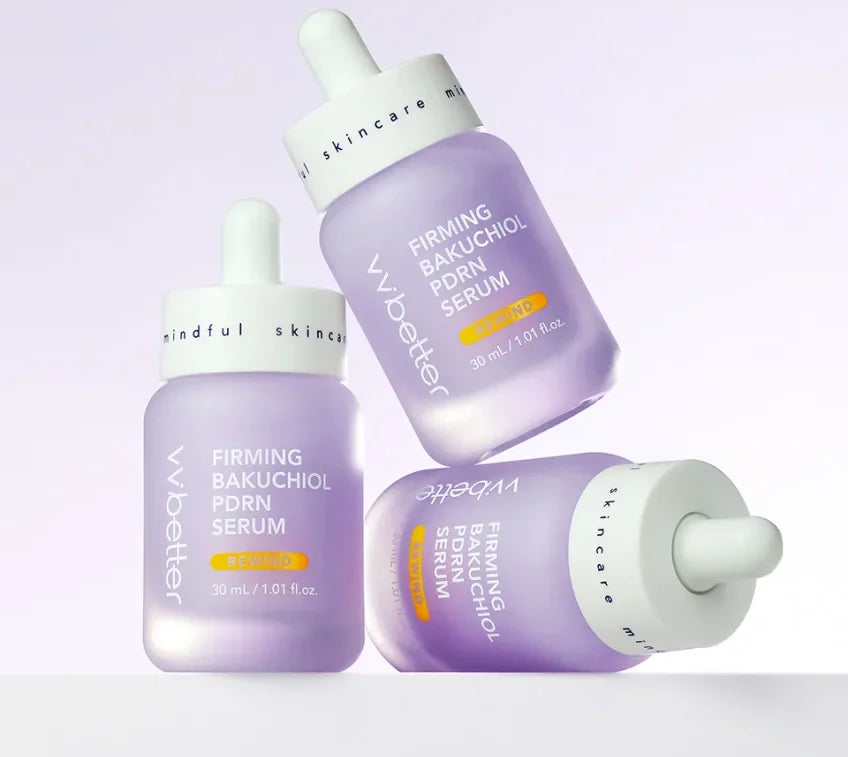
Firming Bakuchiol PDRN Serum contains 1% bakuchiol (10,000 ppm). The "over 99%" you may see next to bakuchiol describes how pure the raw ingredient is before it goes into the formula. It does not mean the bottle is 99% bakuchiol. Concentration and purity answer two different questions. Bakuchiol is a plant-based alternative to retinol, and the serum is REWIND, the firming serum in VVBETTER's Solution Series.

Two numbers, two questions
Skincare labels often put two bakuchiol figures within a few lines of each other, and it is easy to read them as one. They measure different things:
| Concentration | Purity | |
|---|---|---|
| The question it answers | How much of this ingredient is in the finished serum? | How clean is the ingredient we bought from the supplier? |
| Where it applies | The finished formula | The raw material |
| In this serum | 1% (10,000 ppm) | Over 99% |
Think of it as buying very pure flour and baking one small loaf with it. The flour can be 99% pure, yet it is only part of what is in the loaf. Here, a pure raw material is used at 1% of the serum, alongside everything else in the bottle. The ingredient list prints the same figure: bakuchiol (10,000 ppm).
What bakuchiol is, and what it is not
Bakuchiol is a plant-derived ingredient. The bakuchiol in this serum is extracted from Indian babchi seeds. It is a plant-based alternative to retinol, and the raw material used here is over 99% pure. It stays stable in heat and light. The manufacturer also notes that bakuchiol is less light-sensitive than retinol, although sunscreen is still recommended in the morning.
It is a different ingredient from retinol, not another name for it. That matters for how you read other labels, too. "Used in place of retinol" describes a role in a routine. It is not a statement that the two behave identically, and we do not make that claim. The serum is a separate cosmetic formula with its own texture and directions, and it should not be treated as a retinol product.
What else is in the bottle
Bakuchiol is also used elsewhere in VVBETTER. The Purple Line, the extra skincare line for firmness, elasticity and regeneration in mature skin, pairs it with squalane. In this serum, bakuchiol is one of several ingredients. REWIND is built on 60% aloe vera leaf water instead of purified water as the base. It also has AIO MARINE PLANT PDRN (2% of the complex raw material, from marine plants, not salmon), adenosine and niacinamide at 20,400 ppm combined, plant squalane at 100 ppm, ceramide NP and centella-derived madecassoside and asiaticoside. The serum is registered with the Korean MFDS as a functional cosmetic in the brightening and wrinkle-improvement categories (notified July 2025). If you want to see how the PDRN figure should be read, the companion piece What does 20,000 ppm actually mean? uses the same label-reading approach.
How to start using bakuchiol in your evening routine

- Shake the bottle first. The formula separates slightly at rest, which is normal.
- After cleansing and toner, dispense 2–3 drops and press them over the face and neck.
- Follow with a cream.
- If your skin is sensitive, or if bakuchiol is new to you, begin every other night, and patch-test on the jawline for two nights before you start.
- Once your skin is comfortable, use it daily, morning or night. In the morning, finish with sunscreen.
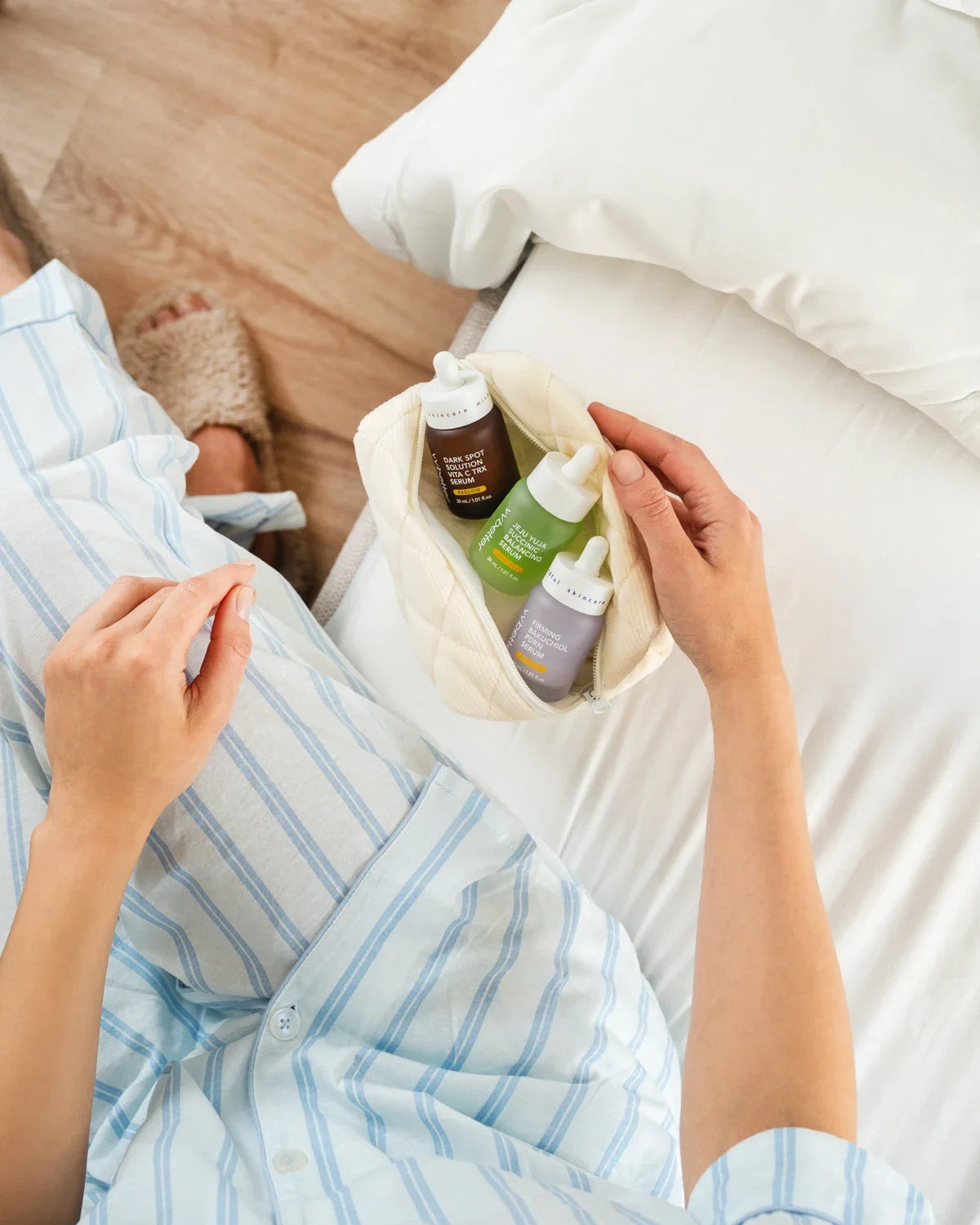
Introduce one unfamiliar product at a time. If a new product and a new serum start on the same day, you will not know which one your skin is responding to. If you use other exfoliating acids or leave-on retinoids, keep the number of new steps small. When you layer VVBETTER's Solution serums, the order is Succinic, then Vita C TRX, then this one last, about 1–2 drops each when you layer all three; very sensitive or thin skin should use one serum per routine.
How bakuchiol is usually described on labels
The same ingredient can be described in very different ways, and a few phrases are worth reading closely:
| Wording you may see | What it usually tells you | What it does not tell you |
|---|---|---|
| "Bakuchiol 1%" | The amount in the finished formula | How pure the raw material was |
| "99% pure bakuchiol" | Purity of the supplied raw material | How much of it is in the bottle |
| "Plant-based alternative to retinol" | The role the ingredient plays in a routine | That the two ingredients give the same results |
| "Plant-derived" | The starting material is a plant, here Indian babchi seeds | Anything about strength or suitability for your skin |
Read together, the first two rows are the whole story of this serum: 1% in the formula, from a raw material that is over 99% pure. Its other keywords are ELASTICITY and firmness, with adenosine and niacinamide beside the bakuchiol.
Five questions to ask any purity claim
- Is the percentage the purity of the raw material, or the amount in the finished formula?
- Is the finished-formula amount printed anywhere? Look for it on the product page or next to the name in the ingredient list.
- Is the ingredient named precisely? "Bakuchiol" is one substance. "Plant retinol alternative" is a description, not a name.
- Are the other ingredients and the base disclosed, so one hero number does not stand in for the formula?
- Does the wording avoid promising the same results as another ingredient?
VVBETTER's own standard follows the same logic. The brand's approach is mindful skincare: clean and thoughtful formulations, at least six months of development for every product, and numbers you can check on the page.
Quick answers
Is bakuchiol the same as retinol?
No. Bakuchiol is a plant-based alternative to retinol, with a raw material over 99% pure here, and it stays stable in heat and light. They are different ingredients, and we do not claim identical results.
Does 99% purity mean the serum is 99% bakuchiol?
No. The serum has 1% bakuchiol (10,000 ppm). The 99% figure is the purity of the raw ingredient, not its concentration.
Can I use it in the morning?
Yes. Bakuchiol is less light-sensitive than retinol, but we still recommend sunscreen in the morning.
Can I use it with the other Solution serums?
Yes, in this order: Succinic, Vita C TRX, then Bakuchiol PDRN, about 1–2 drops each when you layer all three. If your skin is very sensitive or thin, use one serum per routine instead.
Where to go next
- Firming Bakuchiol PDRN Serum — the full ingredient list and directions.
- Bakuchiol — a short ingredient page on purity and amount.
- Shake, then take your moment — why this serum is shaken before use.
- Your guide to Firming Bakuchiol PDRN Serum — placement in a routine.
- Skin quiz — a quick way to pick the first serum.