The short answer
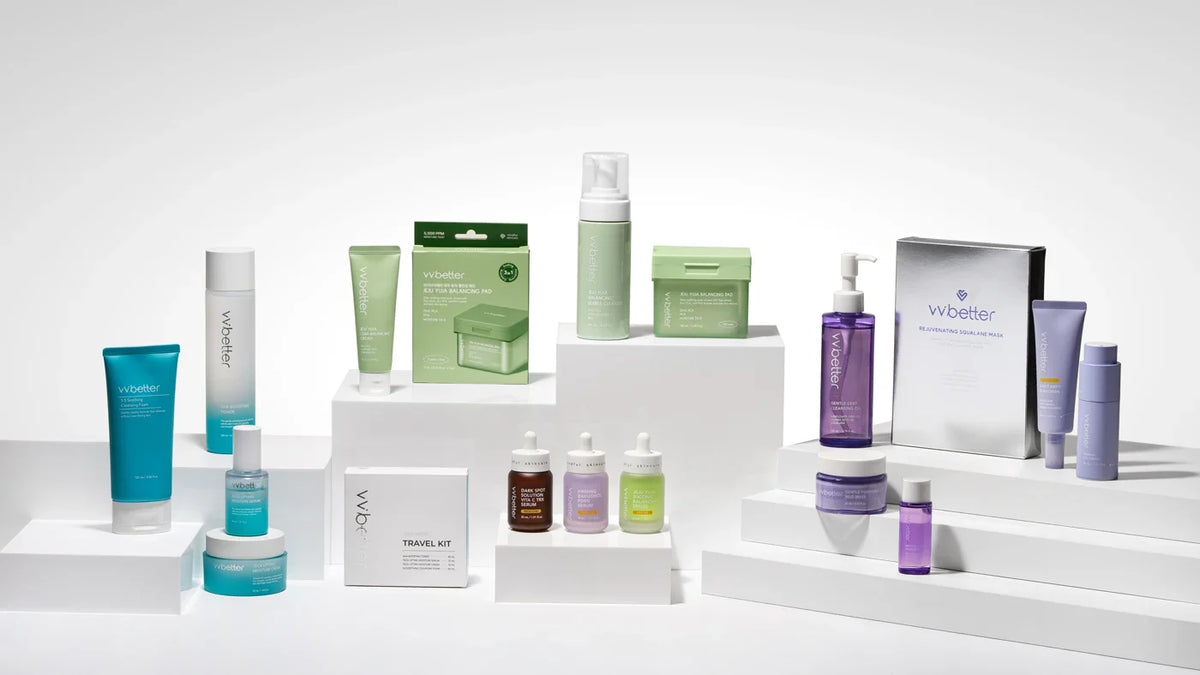
A vegan certification on skincare is a statement about one product, made by a named certifying body. It is not a statement about a whole brand, and it says nothing about scent, gentleness or results. At VVBETTER, 11 of our 17 products carry a vegan certification, and the other six do not. The skill is to check three things: which product, which certifier, and what the mark does not cover.
What “vegan” means on a skincare label
In skincare, vegan generally means the formula contains no animal-derived ingredients, such as lanolin, carmine or collagen taken from animals. It can also reach less obvious places. PDRN, for example, is a nucleotide-based ingredient that is most often taken from salmon; a vegan formula needs a plant-sourced alternative. Our Firming Bakuchiol PDRN Serum uses AIO MARINE PLANT PDRN, a patented complex (supplier patent No. 10-2249241) from marine plants, not salmon.
“Vegan” written on a box and a vegan certification are different things. A claim is the brand’s own word. A certification means an outside body has assessed a product against its own standard and issued a mark. Standards differ between certifying bodies, which is why the name of the certifier matters.
The three checks
- Scope: which product? A mark belongs to a specific product and formula. A brand saying “vegan-certified formulas” does not mean every item it sells is certified.
- Issuer: who certified it? Look for the certifying body’s name or logo. A logo without a name is harder to check.
- Limits: what does it not tell you? Read on; the list of what a vegan mark leaves out is longer than most people expect.

How the VVBETTER marks break down
Ten products are listed below with a vegan mark. Where our records name the certifying body, it is shown. The 5.5 Soothing Cleansing Foam is deliberately left out of the table: its ingredient list includes honey extract, so read that list and write to us before you rely on any vegan mark for that product.
| Certifying body | Products |
|---|---|
| Vegan Standard Certification International Institution | Dark Spot Solution Vita C TRX Serum, Firming Bakuchiol PDRN Serum, Jeju Yuja Balancing Pad, Pad Mini Set, Jeju Yuja Cera Balancing Cream |
| Korea Agency of Vegan Certification (Vegan® logo) | Jeju Yuja Succinic Balancing Serum, Gentle Deep Cleansing Oil, Jeju Yuja Balancing Bubble Cleanser |
| Vegan mark shown on the product page | Rejuvenating Squalane Mask, Daily Airfit Sunscreen (not shipped to the United States) |
Six products do not carry a vegan mark (and the Foam is covered above): AHA Boosting Toner, Teca Lifting Moisture Serum, Teca Lifting Moisture Cream, Firming Eye Cream, Gentle Purifying Mud Mask and Travel Kit Blue. That does not mean they contain animal-derived actives. It means they have not been certified, and the ingredient list is where to look. For the two products in the last row, ask us which body issued the mark: email customer@vvbetter.com with the product name.

A mark is attached to a formula, not a family
Three examples show why scope matters. The Jeju Yuja Balancing Pad (120 pads) and the Pad Mini Set both carry the mark, and each is listed as its own product even though the formula is the same. The Travel Kit Blue carries no vegan mark, and its minis are made to their own formulas rather than as scaled-down copies of the full sizes, so you cannot assume a full-size product’s certification applies to a mini. And the Jeju Yuja Succinic Balancing Serum, Vita C TRX Serum and Bakuchiol PDRN Serum are all certified, but each certification is for that serum, and each serum has its own base: sea buckthorn water at 72%, aloe vera leaf water at 60% and bamboo water at 60%.
The practical rule: if a formula or size changes, treat the mark as needing a fresh look. Our standards page sets out which marks we hold and what each one covers.
A worked example: reading the claim on the PDRN serum
Take the Firming Bakuchiol PDRN Serum and run the three checks. Scope: the mark is for this serum, so it is a product-level statement. Issuer: the Vegan Standard Certification International Institution. Substance: the serum is the REWIND of the Solution series, built on a 60% aloe vera leaf water base, with bakuchiol at 1% (10,000 ppm) and the PDRN complex at 2% (20,000 ppm). The ingredient most likely to raise a question, PDRN, is the marine-plant complex rather than a salmon-derived one, and the other headline active, bakuchiol, is a plant-derived ingredient from babchi seeds. Everything above is checkable against the product page and its ingredient list.
What the check does not settle is what the mark was never meant to settle: how the serum feels, whether you want a dropper serum at all, or how your skin responds to it. Those are separate questions for the product page, the bakuchiol ingredient page and a patch test.
What a vegan mark does not tell you
- Whether the product is scented. The Gentle Deep Cleansing Oil is vegan-certified and also contains essential oils with Limonene and Linalool. The Vita C TRX Serum is vegan-certified and has no added fragrance. See how to read a fragrance label.
- Whether it will suit your skin. A mark describes ingredient sourcing against a standard. It does not predict irritation or results. Patch-test new products on the jawline for two nights.
- Whether it is cruelty-free. Vegan and cruelty-free are separate questions with separate standards.
- Whether it matches your own definition. Some people draw the line more strictly than a certifier does. Read the ingredient list for anything you personally avoid.
- Whether “vegan” means “gentle” or “natural”. It does not mean either.
- Whether a formula is “clean”. Vegan, clean, gentle and natural are different words. VVBETTER describes its approach as clean and thoughtful formulations, free from unnecessary or harsh components, but that is an approach to formulating. It is not what a vegan certifier assesses, and neither one replaces reading the list.
A two-minute check for any vegan claim
- Find the mark on the product page or packaging, not just the word “vegan” in a description.
- Read the certifier’s name, or ask the brand for it.
- Confirm the claim is for the exact product and size you are buying.
- Read the ingredient list for anything you want to avoid.
- If something is unclear, ask. A useful reply names the product, the size and the certifier.
None of this takes long, which is the point of mindful skincare: one moment of focus on the label before the bag.
Quick answers
Are all VVBETTER products vegan?
No. Ten of our 17 products are listed above with a vegan mark, six are not, and the 5.5 Soothing Cleansing Foam needs its ingredient list read first, and our FAQ answers this question too.
Is vegan PDRN the same as ordinary PDRN?
Ordinary PDRN is most often taken from salmon. The PDRN complex in our serum comes from marine plants, so the serum can carry a vegan certification. Our marine-plant PDRN page explains the ingredient.
Does a vegan mark mean the product is fragrance-free?
No. Fragrance is a separate question. Check the ingredient list for Fragrance, Parfum and essential oils.
Where to go next
- Dark Spot Solution Vita C TRX Serum — a certified serum with no added fragrance.
- Firming Bakuchiol PDRN Serum — certified, with a marine-plant PDRN complex.
- Gentle Deep Cleansing Oil — certified, and scented with essential oils.
- All three Solution serums — each certified on its own.
- Specific products, specific evidence — the marks we hold and what they cover.