The short answer
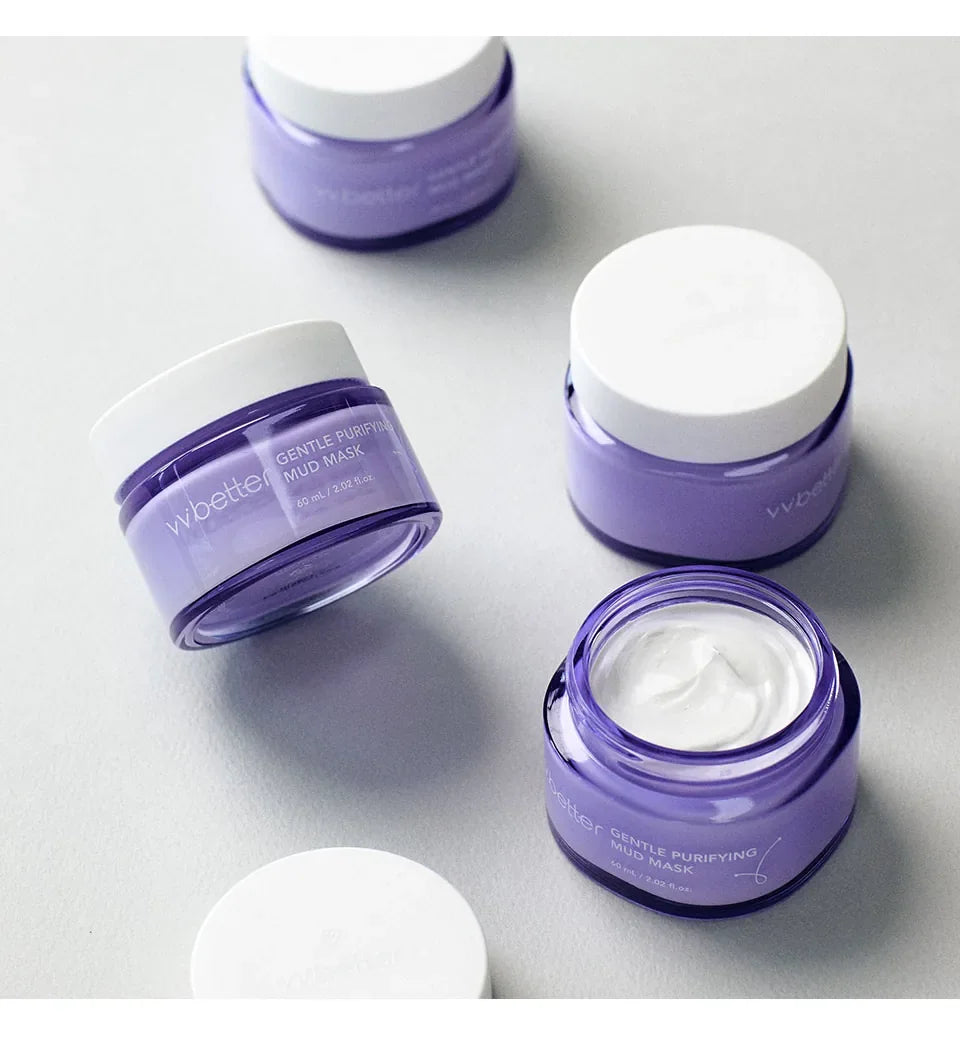
The Gentle Purifying Mud Mask is a mineral-rich, wash-off clay mask built on two clays: British kaolin at 10.5% (105,000 ppm) and American bentonite at 4% (40,000 ppm), 14.5% together. Beside the clay sit bakuchiol, squalane, panthenol, centella and niacinamide, which keep the finish comfortable. It is for skin that gets oily or has visible blackheads and rough texture. Dry or normal skin should use it once a week for about 10 minutes; oily skin once or twice a week for about 15 minutes. Rinse it off before it hardens fully.
Why two clays?
Clay masks work in a simple, physical way: the clay sits on the skin, takes up what is on the surface, and is rinsed away. This mask uses two clays because they do different jobs.
| Clay | Amount | What it does |
|---|---|---|
| British kaolin | 10.5% (105,000 ppm) | A soft, white clay that takes up excess oil at the surface. |
| American bentonite | 4% (40,000 ppm) | A clay that swells with water and holds on to surface buildup. |
| Together | 14.5% | The clay base of the formula, which VVBETTER describes as a cross-linked network that keeps oil care and moisture in balance. |
The kaolin is the gentler partner, and it does most of the oil work. The bentonite expands as it meets water and grips what is on the skin. That is why the mask feels creamy on the way on and washes off cleanly with lukewarm water.

What keeps it from feeling stripped
Clay can dry the skin if it is left alone, which is why the formula also carries comfort ingredients. Amounts for these are not published, so they are listed by what they are:
- Squalane and panthenol are there so the skin does not feel stripped after rinsing.
- Beta-glucan, hyaluronic acid and centella asiatica extract are for skin that feels reactive or dry.
- Niacinamide is for tone that looks uneven.
- Bakuchiol and a peptide complex carry the Purple Line's signature pair into a mask.
- Ceramide NP and amino acids (such as glycine, serine and lysine) are also on the list.
The ingredient list has no fragrance and no ethanol. It does include titanium dioxide, quartz and dimethicone, so read the full list if you avoid any of those. The mask does not carry a vegan mark, and it is not marketed as vegan.
Who it suits
The mud mask is one of two masks in the Purple Line, VVBETTER's extra skincare for firmness, elasticity and regeneration, designed with mature skin in mind. The mask itself is labelled for all skin types, and the brand's tags for it are purifying, regeneration, exfoliation and texture care. In practice it is the line's step for oil, pores and surface texture:
- Skin that looks shiny by midday.
- Skin with visible blackheads and whiteheads, and pores that look enlarged or clogged.
- Skin whose texture feels rough or uneven, or where makeup tends to lift.
- Late teens and older, with oil or pore concerns.
It is described as a gentle clay mask, but start more slowly if your skin is dry or reactive, if you also use exfoliating acids or a retinoid, or if you have recently had a skin treatment. Details are in the patch-test section below. If you are unsure about your skin type, the skin quiz can help.
How often and for how long
| Skin type | How often | How long |
|---|---|---|
| Dry or normal | Once a week | About 10 minutes |
| Oily | Once or twice a week | About 15 minutes |
| Oily, with more buildup | Twice a week | About 15 minutes |
Do not leave the mask on past the stated time, and do not let it dry out completely and harden. Once or twice a week is the ceiling; this is not a daily step.
How to apply it, step by step
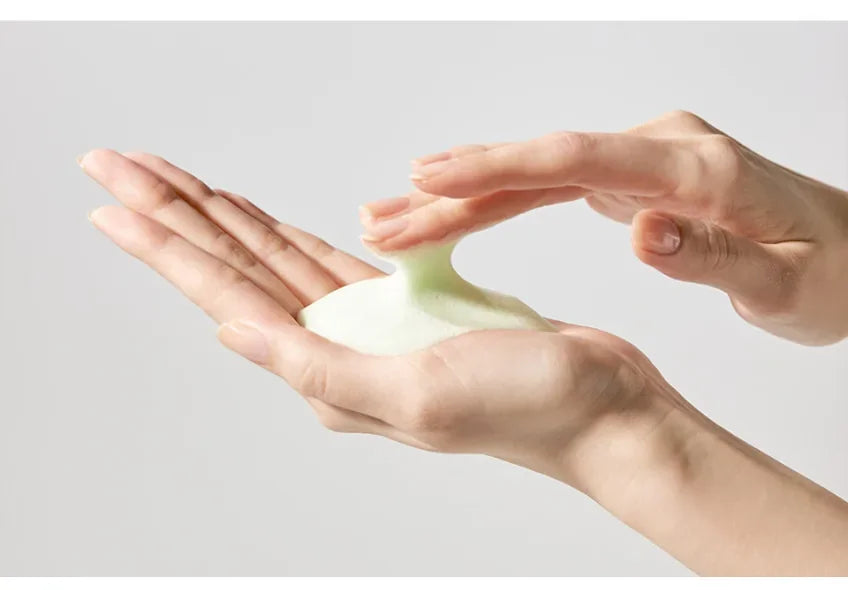
- Cleanse first. A mild, low-pH cleanser such as the 5.5 Soothing Cleansing Foam works well. Pat the face dry; the mask goes on a dry face.
- Scoop a little out of the jar with a spatula or clean fingertips.
- Spread an even layer over the face, avoiding the eye area and the lips. Not too thick and not too thin: the thicker the layer, the longer it takes to dry.
- Wait 10 to 15 minutes, according to the table above.
- Add lukewarm water and roll the mask off gently with your fingertips. Do it before the clay hardens fully.
- Continue with toner, serum and cream.

The texture is a soft, creamy ivory clay that spreads smoothly and dries slowly. It loosens easily when it meets lukewarm water.

Troubleshooting
A cloudy film stays on the skin after rinsing
On oily skin, sebum and clay can bind together, so water alone does not take it all off. Wash once more with the 5.5 Soothing Cleansing Foam, a mild foam cleanser, to finish.
The skin feels tight afterwards
Either the mask stayed on too long or it was used too often. Shorten the time, rinse before it hardens, and finish with toner and cream. If your skin is dry, keep to once a week.
The mask dries unevenly
Usually the layer is uneven, or too thick in places. Aim for an even layer next time.
Patch test and cautions
No product suits every skin. Try the mask on the jawline first, for the shorter time, before using it on the whole face. If you notice redness, swelling or itching during or after use, stop using it and consult a specialist. Do not use it on broken or irritated skin, and keep it out of the eye area. Store it with the lid closed, at room temperature (10-30 degrees C), away from direct sunlight and out of the reach of children, and use it within 12 months of opening.
Where it sits in a routine
The order is: cleanser, then mud mask, then toner, serum and cream. It slots in between cleansing and toning and does not replace any other step. The 5.5 Soothing Cleansing Foam before it and the Jeju Yuja Balancing Pad after it fit well. A weekly clay step, kept short and followed by toner and cream, is the kind of mindful routine the brand is after: very-very better skin over time, not a one-off scrub.
Mud mask or sheet mask?
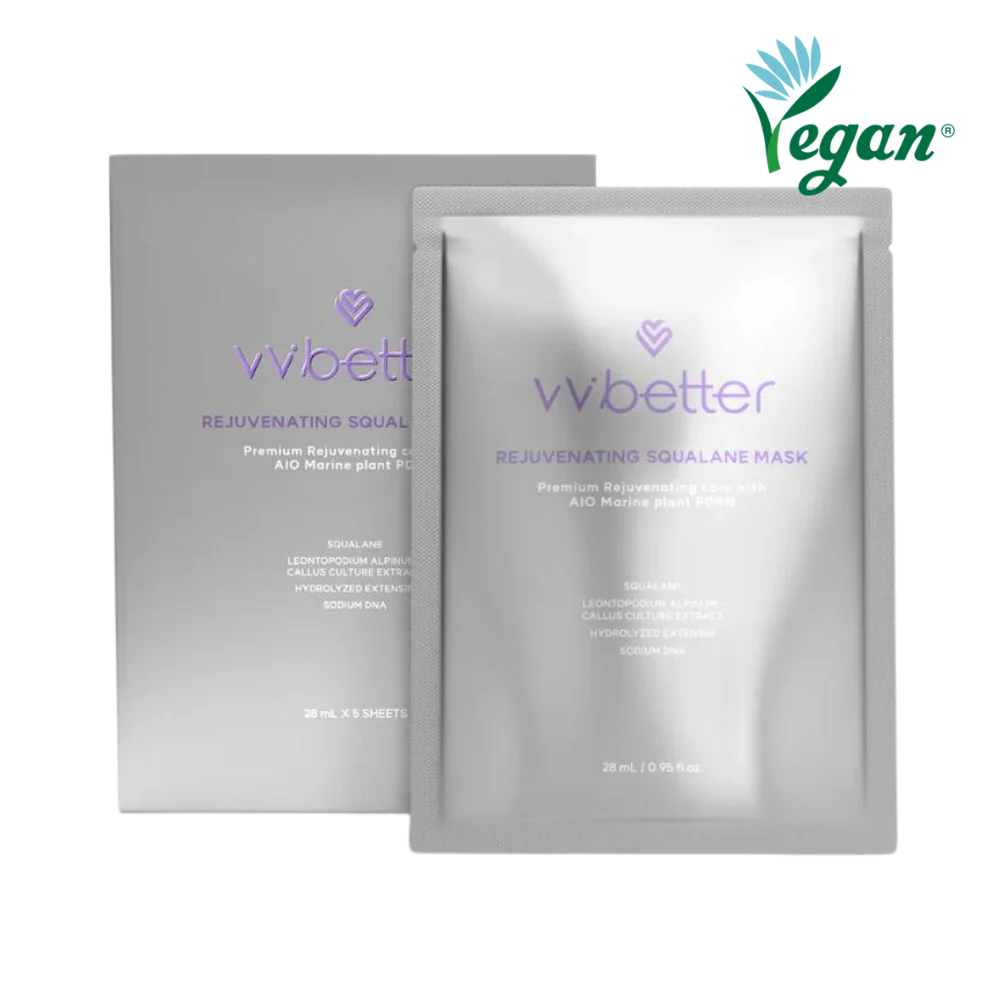
The other mask in the Purple Line is the Rejuvenating Squalane Mask, a sheet mask. They answer different questions. The mud mask is a clay and rinses off. It is for oil, visible buildup and rough texture, and you use it once or twice a week. The sheet mask adds moisture, stays on the skin as a wet essence-soaked sheet, and is used two to three times a week. Many people use one of them on a given evening, not both. The journal piece Mud versus sheet compares them in more depth.
Quick answers
How often should I use the Mud Mask?
Dry or normal skin once a week for about 10 minutes. Oily skin once or twice a week for about 15 minutes.
Will it dry out my skin?
Clay can, which is why the formula also carries squalane, panthenol, beta-glucan and hyaluronic acid. Rinse before the mask hardens fully, and follow with toner and cream. Dry skin: keep to once a week.
Where does it go in my routine?
After cleansing and before toner. Apply it to a dry face, rinse, then continue with toner, serum and cream.
How thick should I apply it?
An even layer, neither too thick nor too thin. The thicker the layer, the longer it takes to dry.
Where to go next
- Gentle Purifying Mud Mask - the product page.
- All masks - the wash-off and sheet options together.
- Your guide to the Rejuvenating Squalane Mask - the moisture-focused neighbour.
- Your guide to the 5.5 Soothing Cleansing Foam - the cleanser to use before and after the mask.