The short answer
You do not need ten steps to follow a Korean skincare routine. Think of the ten-step version as a menu of possible formats, from oil cleanser to sheet mask, and pick the few that do a job for your skin. Most people do well with three to five steps: cleanse, an optional serum, moisturize, and sunscreen in the morning.
Where the ten-step idea comes from, and what it leaves out
The ten-step routine is a popular shorthand for Korean skincare, usually listing an oil cleanser, a water-based cleanser, an exfoliator, a toner, an essence, a serum, a sheet mask, a cream and sun care. It is a useful picture of the range of formats available. As an instruction it overreaches. Nobody has to use every category, and a routine that is too long to keep up helps less than a short one you actually do.
A better way to read the list is as a toolbox. Each tool has a job, and a good routine uses only the tools it needs. That is also how VVBETTER, a K-beauty brand Made in Korea since 2021, approaches it: mindful skincare with clean and thoughtful formulations, free from unnecessary or harsh components, and a range organized by role in the routine, with each product explaining where it fits.
The building blocks, and when to skip each
| Block | Its job | VVBETTER example | Often fine to skip when |
|---|---|---|---|
| Oil cleanser | First cleanse, to lift makeup and sunscreen | Gentle Deep Cleansing Oil, used on dry hands and a dry face | You wore no makeup or sunscreen |
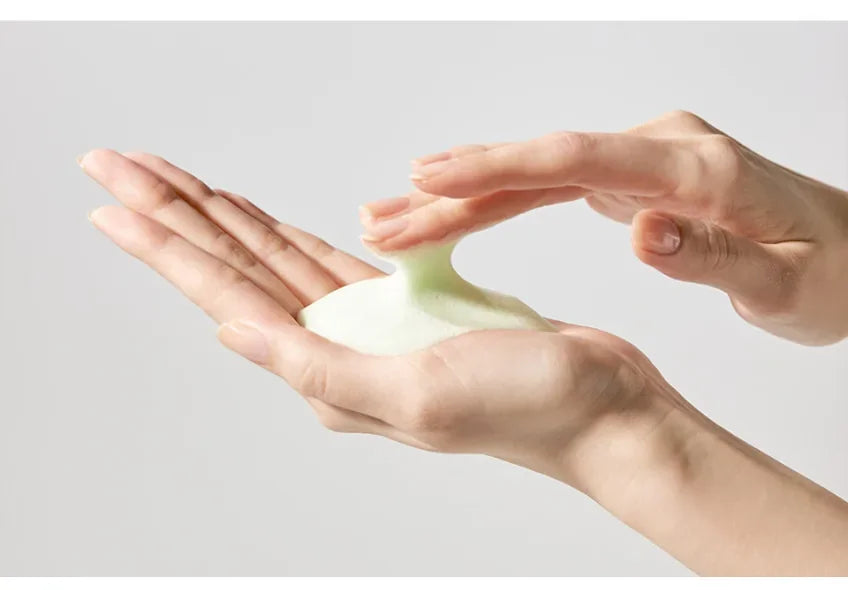
| Water-based cleanser | Everyday cleanse, morning or evening | 5.5 Soothing Cleansing Foam or Jeju Yuja Balancing Bubble Cleanser (see cleansers) | Rarely; this is the step most routines keep |
| Toner | A second layer after cleansing, as pads or a liquid on a cotton pad | Jeju Yuja Balancing Pad or AHA Boosting Toner (see toners) | You want the shortest possible routine |
| Serum | A focus for one concern | The Solution serums (REGLOW, REWIND, REFINE), 2-3 drops | You have no particular concern to focus on yet |
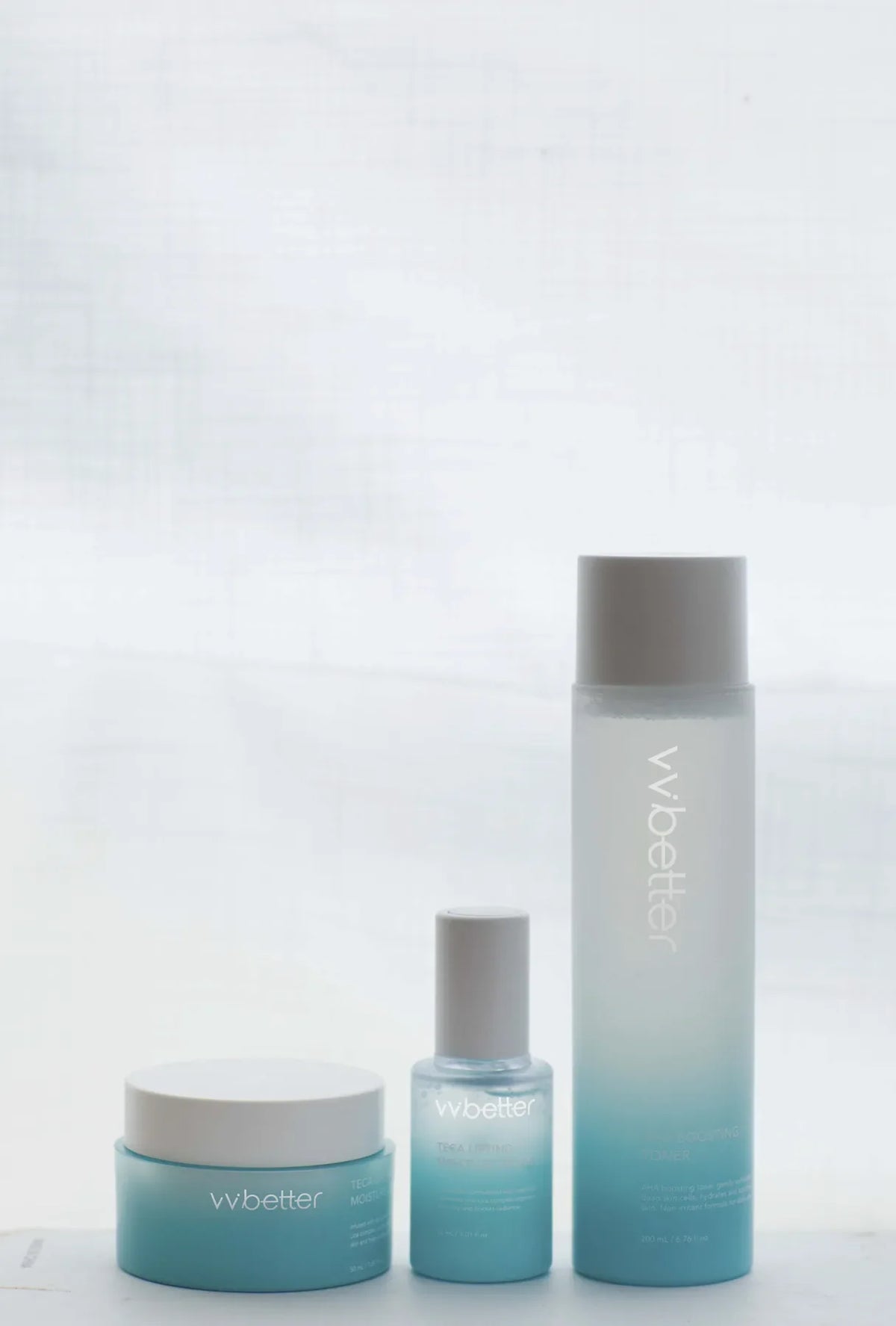
| Cream | Moisturize and seal the routine | Teca Lifting Moisture Cream or Jeju Yuja Cera Balancing Cream | Rarely |
| Mask | An occasional extra, not a daily step | Gentle Purifying Mud Mask, once or twice a week | Most weeks |
| Sun care | The final morning step | Choose a sunscreen you will actually wear | Never in the morning |

Three routines: three, four and five steps
Three steps: cleanse, moisturize, protect
The simplest useful routine. In the morning, cleanse, moisturize and apply sunscreen. In the evening, cleanse and moisturize. As examples, the 5.5 Foam with the Teca Lifting Moisture Cream suits skin that feels dry or tight, and the Bubble Cleanser with the Cera Balancing Cream suits skin that gets oily. The skin quiz offers "Just the essentials" as one of its answers for people who want exactly this.
Four steps: the Blue Line sequence
The Blue Line, VVBETTER's base skincare line for dry, sensitive or dehydrated skin, runs foam, toner, serum, cream, with hydration, soothing and the skin barrier in mind. Toner goes on with a cotton pad swept along the skin's texture, avoiding the eye area. Serum goes on in 2-3 drops. Because the AHA toner contains exfoliating ingredients, finish the morning with sunscreen and try the toner on a small area first.
Five steps: add one pause
Take the Green Line sequence of Bubble Cleanser, Balancing Pad, Succinic Serum and Cera Balancing Cream. The Green Line is the Jeju Yuja line for purifying and balance, suited to oily, combination or breakout-prone skin that can also be sensitive. The fifth step is a choice, not a rule: a 3-5 minute pad pack, a weekly mask or, in the morning, sunscreen. Extras such as a cleansing oil, an eye cream or a mask come from the Purple Line, the extra skincare line for mature skin. Five steps is as long as most routines need to get.
Choosing formats you will actually use
Format matters because it changes how a routine feels. A pad is quick and keeps your hands free. A dropper serum asks you to measure a small amount. A foam asks for a minute or two at the sink. A clay mask asks you to set a timer.

Three practical questions help you choose. How much time do you have on a weekday morning? Which textures do you enjoy touching? And what do you already use that works? There is no benefit in replacing a product you like with a new one for the sake of a step count. Whatever the format, the formula is the test: VVBETTER describes every product as developed for at least six months, as a balanced blend of ingredients that is gentle even on sensitive skin.
Adding or dropping a step
- Add one product at a time. Follow its own directions and wait until the routine feels familiar before changing another thing.
- Drop what you do not notice. If a step has no job you can name, it is a candidate to leave out.
- Keep the cleanse and the sunscreen honest. These two steps have a clear job even in a very short routine.
- Match the product to the role. A serum and a cream do different things; one does not stand in for the other.
For help with ordering, the morning shelf and evening shelf article shows how the same few products split across the day.
Quick answers
How many steps does a Korean skincare routine need?
As many as have a job for you. Three to five steps is common: cleanse, an optional toner or serum, a cream, and sunscreen in the morning.
Do I have to double cleanse every night?
No. A second cleanse is mainly for days you wore makeup or sunscreen. On a day with neither, one gentle water-based cleanse is usually enough.
Is a short Korean routine gentler on sensitive skin?
Fewer steps make it easier to see what your skin likes. Gentle formulas help too, and the brand describes its own as a balanced blend of ingredients, gentle even on sensitive skin. Patch test any new product and add one at a time.
Should I use a whole line together?
You can, but you do not have to. A line shows a suggested order. Many routines use two or three products from it, and the routine builder helps you compare a small set.
Where to go next
- Routines - morning and evening sequences you can trim
- Skin quiz - find a short starting point
- A routine, not a rulebook - why order matters more than count
- Cleansers - oil, foam and bubble formats
- Toners - pads and liquid toners