
The short answer
AHA Boosting Toner and Jeju Yuja Balancing Bubble Cleanser both contain exfoliating acids, but they sit in different places in a routine. The toner is a leave-on step you sweep over clean skin with a cotton pad; the Bubble Cleanser is the cleansing step itself and rinses off. Most people start with one of them, not both.
Two acid products, two places in your routine
If you are comparing an AHA toner with an acid cleanser, the first question is not "which acid is stronger" but "where does this product live, and how long does it stay on my skin?" A leave-on product keeps working until you apply the next step. A rinse-off product is on your skin for the length of a wash. That difference matters more than any single percentage. We think of this as mindful skincare: add one acid step, see how your skin responds, and only then think about a second.

| AHA Boosting Toner 200 ml | Jeju Yuja Balancing Bubble Cleanser 145 ml | |
|---|---|---|
| Routine step | Toner, right after cleansing and before serum | Cleanser, morning and evening (second cleanse after oil if you wear makeup) |
| Stays on skin? | Yes, leave-on | No, rinsed off |
| Acids listed | Lactic acid 0.45% (4,500 ppm) and glycolic acid 0.07% (700 ppm), together AHA 0.52%; betaine salicylate 0.1% (BHA) | AHA (citric acid) 0.62%; BHA (salicylic acid) 0.5% |
| pH | 5.5 | 5.5 |
| How you apply it | Cotton pad, wiped along the skin, away from the eyes | 2–3 pumps of foam into wet hands, massage about 30 seconds, rinse with lukewarm water |
| Skin it is written for | Dry, normal, combination and oily skin; rough or dull-looking texture, congested-looking pores | Oily and combination skin, skin prone to breakouts, sensitive skin that still wants a low-pH acid cleanse |
| Line | Blue Line (base skincare: hydration, soothing, skin barrier) | Green Line (Jeju Yuja: balance, texture care) |
Why "0.62%" appears on both labels and means two different things
The toner's acids add up to 0.62%: 0.52% AHA (lactic and glycolic) plus 0.1% BHA. The Bubble Cleanser lists 0.62% as its AHA figure alone, with a separate 0.5% BHA. Same number, different meaning. It is easy to copy one into the other, so it is worth reading the product page rather than relying on memory.
You also cannot compare the two by adding the figures up. A toner percentage describes something that stays on your skin; a cleanser percentage describes something that is on your skin for around half a minute of massage and then rinsed away. The sensible way to compare them is by what each one is meant to do:
- The toner is a mild AHA and BHA toner at a neutral pH of 5.5, and a daily "prep" step in the Blue Line. It is meant to sweep away dead surface cells so skin looks smoother and serum and makeup sit more evenly, which is why it works well as a boosting step before makeup. Centella asiatica and chamomile extracts sit in the formula alongside hyaluronic acid, betaine and glycerin, so the Blue Line habit of hydration and comfort carries through. The BHA here comes from betaine salicylate (with willow bark water in the formula), not salicylic acid itself.
- The Bubble Cleanser is a mild AHA and BHA wash at pH 5.5 for skin that gets oily. It is built on Jeju yuja with zinc PCA, which is what puts it in the Green Line, the line for purifying and balance that is written specially for sensitive skin too. Its BHA is salicylic acid at 0.5%. It also carries 0.5% lactobacillus probiotics, ceramide NP and 0.5% patented CERA BOOSTER-V (a supplier-patented ingredient) so skin feels comfortable after rinsing. It is registered with the Korean MFDS as a functional cosmetic for skin prone to breakouts (notified October 2024).
The longer ingredient stories are in the AHA Boosting Toner guide and the Bubble Cleanser guide.
How to use the AHA Boosting Toner

- Cleanse first. Use the toner morning and evening, right after cleansing and before serum.
- Soak a cotton pad with the toner.
- Sweep it over a dry face and neck, along the direction of the skin's texture. Keep it away from the eye area.
- Let it absorb, then continue with serum and cream.
- In the morning, finish with sunscreen.
Use it as a wipe, not as a soaked toner pack. Because it contains AHA and BHA, the directions recommend sweeping a pad over the skin rather than leaving soaked pads on. If acids are new to you, or you already use retinoids or other acids, start every other day and patch-test on the jawline for two nights first. The label also carries the standard AHA caution: it may increase your skin's sensitivity to the sun, so use sunscreen. One 200 ml bottle lasts about one to one and a half months of daily use.
How to use the Bubble Cleanser

- Shake the bottle gently first. It contains a small amount of natural colourant.
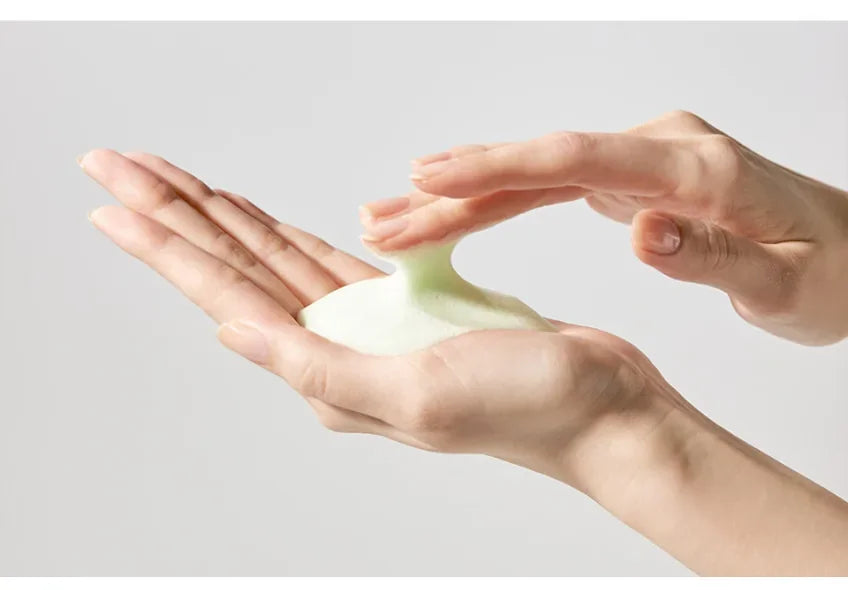
- Pump 2–3 times into wet hands.
- Massage the foam over the face for about 30 seconds.
- Rinse with lukewarm water.
On makeup or sunscreen days, use Gentle Deep Cleansing Oil first and the Bubble Cleanser second. On a bare-skin morning the cleanser alone is enough. If you also use a leave-on acid, start the cleanser every other evening. The label's sun-sensitivity line applies to leave-on products; for rinse-off products the same regulatory wording says sunscreen is not required, although many people wear it every morning anyway.
Using both: a cautious way to do it
Nothing in either product's directions says they cannot share a routine, but each says to introduce acids gradually if you already use others. A careful approach, offered as general guidance rather than a rule:
- Start with the one that matches your main concern. Texture that looks rough or dull, or makeup that goes patchy, points to the toner. Shine, congested-looking pores or breakouts point to the cleanser.
- Give it a couple of weeks before adding the second, and add it on alternate evenings first.
- Keep other acids out of the same routine while you settle in, including exfoliating products from other brands.
- Stop and pull back if skin stings, tightens or looks red. Do not use either on broken or irritated skin.
If you have reacted to AHA or BHA in the past, choose a formula without acids; both pages say very sensitive skin should patch-test first. The AHA & BHA ingredient page explains how the two acid families differ, and the skin quiz can suggest a starting point.
Quick answers
Is the Bubble Cleanser a replacement for the toner?
No. They are different steps. The cleanser washes off; the toner stays on and comes after cleansing. Using the cleanser does not mean you skip a toner step, and using the toner does not replace cleansing.
Can I use the toner and the cleanser on the same day?
The directions do not forbid it, but go slowly. Begin with one product, add the other on alternate evenings after a couple of weeks, and drop back if your skin feels tight or stingy.
Do I need sunscreen with these?
With the toner, yes: the label says AHA may increase sun sensitivity and asks you to use sunscreen. With the cleanser, the label wording treats rinse-off products differently, but sunscreen in the morning is a good habit with any acid in your routine.
Which is better for oily skin?
Both are written for oily skin among others. The Bubble Cleanser leans toward oily, combination and breakout-prone skin; the toner suits dry through oily skin and is chosen for texture and prep. "Better" depends on the step you want to add.
Where to go next
- AHA Boosting Toner — the leave-on, wipe-on step.
- Jeju Yuja Balancing Bubble Cleanser — the low-pH acid foam.
- All cleansers — if you want a non-acid option such as the 5.5 Soothing Cleansing Foam.
- One pad, two ways — a toner step with PHA that you can wipe or leave on.
VVBETTER keywords: #HYDRATION #GLOW (AHA Boosting Toner, Blue Line) · #BALANCE #EXFOLIATION #TEXTURE CARE (Bubble Cleanser, Green Line)