The short answer
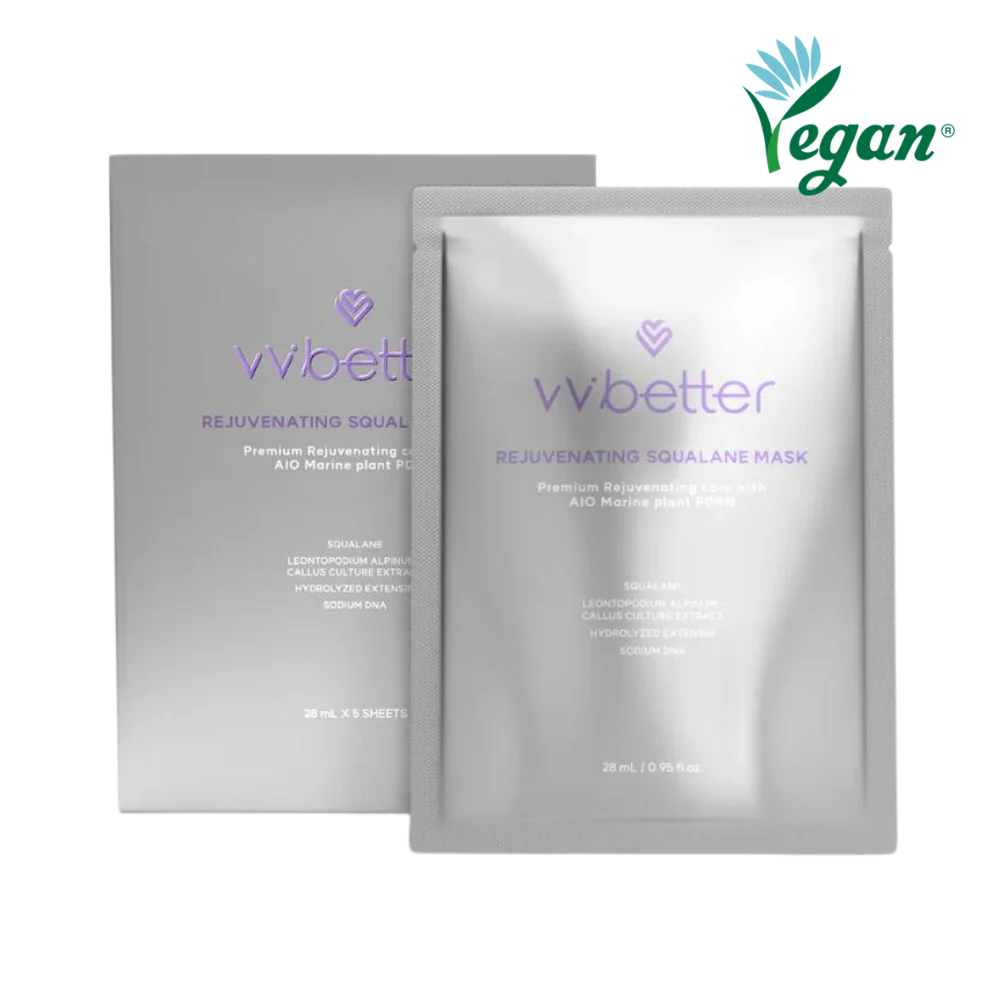
The Rejuvenating Squalane Mask is a vegan sheet mask from the Purple Line for skin that feels dry, rough, dull or tired. Each 28 ml sachet is soaked with an essence built around four plant-derived ingredients: olive squalane, edelweiss callus extract, a marine-plant PDRN complex at 2,000 ppm (0.2%) and a carrot-derived plant collagen, with centella for soothing. Use it two to three times a week in the evening, for 10 to 20 minutes, and take it off before it dries out.
What this mask is built around
Most sheet mask descriptions list ingredient names and leave you to guess. Here is what the four lead ingredients are, one at a time, and why they were put together. VVBETTER calls the combination its rejuvenating complex, and the name describes the formula's intent rather than a medical result. The mask belongs to the Purple Line (Firming Purple Line), VVBETTER's extra skincare for vitality, elasticity and regeneration, which is designed with mature skin in mind. The mask itself is labelled for all skin types, and the brand's tags for it are moisturizing, regeneration and soothing.

1. Squalane, from olives
Squalane is a light, skin-friendly oil that softens without a greasy feel. In this mask it is plant-derived, from olives, and the ingredient list shows it at 100 ppm (0.01%). It is the part of the essence that helps the skin feel cushioned rather than just wet.
2. Edelweiss callus culture extract
Edelweiss is an alpine flower. The ingredient list shows this as Leontopodium alpinum callus culture extract, and the formula describes it as a plant-derived "placenta" extract. The word borrows its name from placenta extracts, but this one comes from a flower and not from an animal.
3. A marine-plant PDRN complex
PDRN is an ingredient name used widely in skincare. Here it comes from marine plants (seaweed), not from salmon, and the mask contains it as a vegan PDRN complex at 2,000 ppm (0.2%). The raw material is AIO MARINE PLANT PDRN, and it appears on the ingredient list as Sodium DNA. The 2,000 ppm refers to the complex as a whole, not to pure sodium DNA, so read it as a description of the raw material and not as a measure of one molecule.
4. A carrot-derived plant collagen
This is the collagen in the mask's key points: a plant-derived collagen from carrots, listed as hydrolyzed extensin. It is the plant-based counterpart to the collagen-type proteins found in other skincare, and it is not animal collagen.
What else is in the essence
Centella is the fourth key point on the brand's list, after vegan PDRN, collagen and squalane, and it is the soothing part of the formula. The rest of the essence, in groups:
| Ingredient group | What is on the list | Why it is there |
|---|---|---|
| Centella complex | Asiaticoside, madecassic acid, asiatic acid, centella asiatica extract, madecassoside | A five-part centella complex to soothe skin that is tired or reactive |
| Hyaluronic acids and beta-glucan | Sodium hyaluronate, hydrolyzed hyaluronic acid, sodium acetylated hyaluronate (three types), beta-glucan | Moisture that keeps the essence feeling soft and not sticky |
| Niacinamide and glutathione | Both listed, amounts not published | For tone that looks uneven |
| Peptides | Five peptides, including copper tripeptide-1 and acetyl hexapeptide-8 | Added to the formula as supporting ingredients |
| Barrier and comfort ingredients | Ceramide NP, cholesterol, panthenol, betaine, adenosine | Comfort and a cushioned finish |
The full list also includes bergamot oil, limonene and linalool. These are naturally scented ingredients, so they are worth checking if you avoid fragrance.
Who the mask suits
- Skin that feels dry or looks dull and wants a deeper moisture step than a toner and cream.
- Skin that looks tired, for example after a long day outdoors.
- Anyone who wants a once-or-twice-a-week treatment step without adding a new daily product.
The Purple Line is designed with mature skin in mind, for skin that looks smoother and feels firmer and more elastic, but this mask is labelled for all skin types and is not limited to one age group. If you would rather avoid products that contain bergamot oil, limonene or linalool, read the list above first. The mask completed a skin low-irritation test, and it carries a vegan certification under Korean standards. Neither of those is a guarantee for your particular skin, so the patch test below matters.
How to use it, step by step
- Cleanse, then tone. Use your normal cleanser and a toner to prepare the skin. Evening suits it best.
- Open a sachet and unfold the sheet. Peel off the film and lay the sheet flat on the face, pressing it against the skin. Avoid the eye area.
- Leave it on for 10 to 20 minutes. Take it off before the sheet dries out.
- Pat in the remaining essence. Do not rinse. Press what is left on the skin into the face and neck. The triple hyaluronic acid and beta-glucan essence is meant to leave the skin looking glowy once the sheet is off.
- Finish with a cream, such as the Teca Lifting Moisture Cream.

Each sheet is single-use. Do not reuse it. If there is essence left in the sachet, use it the same day on your neck or the backs of your hands, since an opened sachet should be used right away.
How often: a simple weekly rhythm
| Week | Suggested rhythm |
|---|---|
| Week 1 | Patch test on the jawline for 10 minutes first, then one full-face mask on an evening when you are not trying anything else new. |
| Week 2 onward | Two to three masks a week, on the evenings your skin needs extra care. |
| Rest days | Your usual cleanser, toner, serum and cream. No need to mask daily. |
One box of five sheets is about two weeks at the two-to-three-times-a-week rhythm, at roughly $2.46 a sheet at the listed $12.29. For help on spacing masks with other steps, the journal piece on mask timing is a good companion. A mask a few evenings a week is mindful skincare in the brand's sense: a deliberate extra step, not a daily load.
Patch test and cautions
If you react easily, or if PDRN is a new ingredient for you, test a sheet along the jawline for 10 minutes before a full-face mask. Keep the mask away from the eye area. If you notice redness, swelling or itching during or after use, stop and consult a specialist. Keep it away from broken or irritated skin. Store it out of reach of children and away from direct sunlight.
How it differs from the others
The first neighbour to compare is the Bakuchiol PDRN Serum. The sheet mask and the serum use the same kind of marine-plant vegan PDRN, but the serum carries ten times as much: a patented vegan PDRN complex at 2% (20,000 ppm) against 0.2% (2,000 ppm) in the mask. So the mask is a periodic treatment step, and the serum is the daily one. If you use both, put the serum on after the mask.
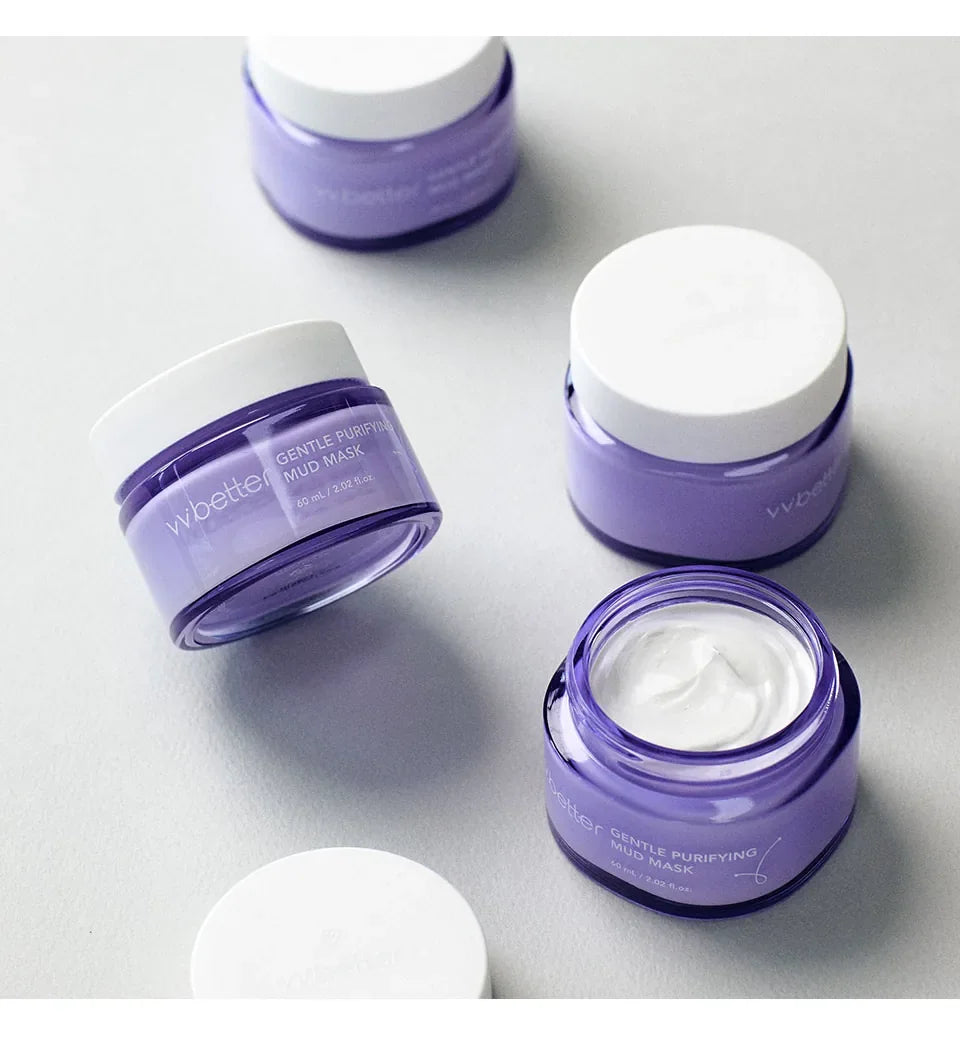
Inside the Purple Line, the other mask is the Gentle Purifying Mud Mask. They do different jobs: the sheet mask adds moisture and is left on a few minutes longer, while the mud mask is a clay for oil and surface buildup. For a head-to-head, see mud mask versus sheet mask.
Quick answers
How often should I use it?
Two to three times a week, on the evenings when your skin needs extra care.
How long should I leave it on?
10 to 20 minutes. Remove it before the sheet dries out.
Does it contain animal-derived ingredients?
The four lead ingredients are plant-derived, and the product carries a vegan certification under Korean standards.
Should I rinse my face after the mask?
No. Pat in the remaining essence, then follow with a cream.
Where to go next
- Rejuvenating Squalane Mask - the product page.
- All masks - sheet and wash-off options together.
- Vegan PDRN explained - more on the ingredient family.
- Squalane explained - what the olive-derived oil does.
- Your guide to the Bakuchiol PDRN Serum - the daily step that follows the mask.